Τὸ παρακάτω κείμενο δημοσιεύθηκε στὸ Story Bridge Journal τὸ Νοέμβριο τοῦ 2024, τρεῖς μέρες πρὶν κυκλοφορήσει τὸ Μαντεῖο. Ὡς συγγραφέας τοῦ κειμένου παρουσιάζεται, παραδόξως, ὁ Ἄγγελος Ἄμβροτος (Angelos Amvrotos). Παρατίθεται ἐδῶ χωρὶς σχολιασμό.

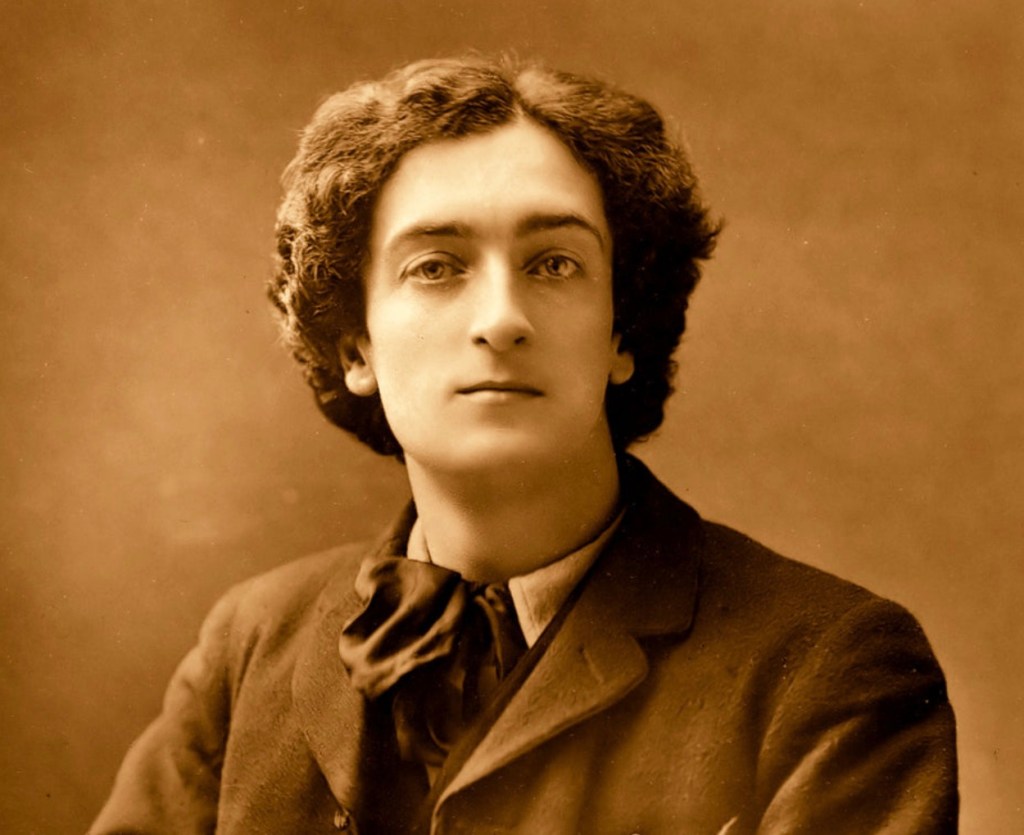
Angelos Amvrotos
Queering Death: George Le Nonce’s Oracle
(Dis)orientation
Le Nonce’s Oracle is above all an attack against chrononormativity. It employs (and queers) different types of discourses, which constantly redefine the life/death binary. Oracle begins with a quasi-autobiographical pseudo-essay, ironically titled Individuation, which ostensibly explores the issue of the origin and nature of poetry, equating in the process the discourse of the Other with the spectral discourses of the dead, who display powers of agency and communication that in themselves question their status as dead and, ipso facto, the life/death binary. This ostensibly theoretical exploration is followed by Personality Cult, a series of thirty-five prose poems, each alluding to the life and death of a female poet, including those referred to in Individuation (namely, Nana Isaia, Sylvia Plath, and Maria Servaki). These prose poems consist of either first- or third-person narratives from the point of view of the poet herself, with characteristic attacks on chrononormativity in the form of blatant anachronisms. For example, Sappho appears to be surviving in the 21st century and is depicted as having fallen victim to the #MeToo movement as a pedophile. The third part of Oracle, Otherness, consists of thirty-five poems, which mirror the prose poems of the second part insofar as the work of the same poets is alluded to in each; the allusion is spelled out in the motto of each poem but is clearly evident in either the style and form of the poem (for example, in Poverty, following Gertrude Stein) or in the theme of the poem (for example, in Lightness, following Angheliki Eleftheriou).
Setting the stage
The opening pseudo-essay, Individuation, serves as a philosophical keystone for the collection, setting the stage for the queering of language, time, and the life/death binary. Ostensibly a theoretical exploration of the origins of poetry, the essay intertwines abstract musings with the haunting narrative of Angelos, a figure who blurs the boundaries between the self, the Other, and the dead. Angelos operates as both a character and a symbolic presence, an echo of the spectral figures that populate Oracle. His name—derived from the Greek word for “messenger”—suggests a liminal role, embodying the exchange between realms, much like the poet functions within the collection.
As the narrative of Angelos unfolds, it becomes evident that he is neither fully real nor fully imagined. His spectral presence anchors the essay’s exploration of the dead as active agents in the poetic process. The essay suggests that the voices of the dead are not merely passive echoes but dynamic participants in shaping meaning and identity. In this way, Angelos mirrors the poet’s own role as a medium, channeling the fragmented and recursive nature of existence. His narrative is not linear but cyclical, constantly revisiting key moments and memories that resist resolution.
This dynamic recalls the influence of Jorge Luis Borges, whose works frequently interrogate the fluid boundaries between reality, fiction, and infinity. Like Borges’ labyrinths, the narrative of Angelos spirals inward, collapsing distinctions between the past and present, the living and the dead. Angelos’ story becomes a poetic labyrinth where time, identity, and authorship are endlessly refracted and reimagined. Just as Borges’ stories often feature mirrors as metaphors for self-reflection and the infinite, Angelos can be seen as a mirror to the speaker’s fragmented sense of self—a reflection that is simultaneously familiar and otherworldly.
The essay’s tone—philosophical, self-reflective, and recursive—further underscores its affinity with Borges’ vision of literature as an eternal conversation. By equating the discourse of the Other with the spectral presence of the departed, Individuation positions poetry as a form of communion that transcends temporal and existential boundaries. The spectral becomes both subject and method, as the essay queers authorship itself, framing the poet not as an originator but as a conduit.
Furthermore, Individuation introduces the collection’s central critique of chrononormativity. By presenting the dead—notably figures like Angelos—as interlocutors who display agency and resistance, the essay dismantles the linear frameworks that typically govern life and death. Instead, it positions time as recursive and dialogical, allowing the past to infiltrate and inform the present. The interplay between the narrative of Angelos and the essay’s theoretical reflections encapsulates Oracle’s ambition to challenge normative structures and reimagine existence as a fluid and multifaceted continuum.
Spectral Voices
At the heart of Le Nonce’s Oracle lies the spectral—the voices and presences of the dead, whose role is not simply to haunt but to disrupt, provoke, and reconfigure the structures of life and art. The spectral is not relegated to the margins of the collection; it takes centre stage, beginning with the opening pseudo-essay, Individuation, and continuing throughout the prose poems and lyric verse. These voices challenge the reader’s understanding of identity, authorship, and temporality, offering a vision of existence that transcends binaries, particularly the life/death divide.
The narrative embedded in Individuation introduces Angelos, a figure who epitomizes the spectral presence that underpins the collection. Angelos is at once absent and present, a messenger between realms whose very existence blurs the boundaries between the self, the Other, and the dead. His spectrality is not limited to metaphor; it is woven into the fabric of the essay, shaping its philosophical reflections on the origins and nature of poetry. Angelos is the voice that cannot be contained, the presence that refuses erasure. His role as a messenger aligns him with the poet, who similarly channels and communicates what lies beyond the visible and the tangible.
The spectral presences in Oracle are not confined to Angelos; they extend to the voices of historical and literary figures who appear in the prose poems. Marina Tsvetaeva, Anna Akhmatova, and Audre Lorde are among those who are conjured, their voices refracted through Le Nonce’s poetic lens. These figures are not merely memorialized; they are reimagined and given new life. Tsvetaeva, for example, emerges in a prose poem where the indistinct passage of years mirrors her own struggles with loss and exile, dissolving the boundaries between memory and immediacy. Similarly, Anna Akhmatova’s isolation is rendered as a spectral imprisonment, where the disappearance of people from her life creates a void that is both temporal and existential.
Audre Lorde’s spectrality, however, takes a different form. In her dialogue with her mother in a hospital recovery room, Lorde’s voice transcends the limitations of race, gender, and illness, asserting a multifaceted and fluid identity. She becomes a spectral figure of defiance, her presence a testament to the collection’s embrace of intersectionality and its rejection of reductive binaries. Lorde’s declaration of being “all the women I am” encapsulates Oracle’s broader exploration of identity as a dynamic and layered construct.
The spectral is also intricately linked to the collection’s critique of chrononormativity. By presenting the dead as active participants in the present, Oracle collapses the linear progression of time and replaces it with a recursive temporality. The dead are not confined to a fixed past; they exist alongside the living, reshaping memory, identity, and art. This is evident in the references to Sappho, who is reimagined as a 21st-century figure caught in contemporary moral debates. Her voice, fragmented and eternal, resists the constraints of history, embodying the spectral’s ability to transcend and disrupt temporal boundaries.
Ultimately, the spectral in Oracle is not simply a motif but a methodology. It challenges the reader to reconsider what it means to exist, to remember, and to create. The voices of the dead in the collection are not static echoes; they are dynamic forces that demand engagement and reimagination. Through the spectral, Oracle redefines the life/death binary, presenting a vision of existence that is fluid, interconnected, and endlessly recursive.
Metaphor as Subversion
Metaphor in Oracle transcends its traditional role as a figurative device, functioning instead as a powerful mechanism for queering time, identity, and existence. By reshaping the familiar into the strange and dissolving the boundaries between binaries, the metaphors in the collection enact profound disruptions that align with Freud’s concept of the uncanny (das Unheimliche) and the Russian formalist notion of defamiliarisation (остранение).
1. Freud’s Uncanny and the Ghosts in Metaphor
Sigmund Freud’s notion of the uncanny describes the unsettling experience of encountering something that is at once familiar and alien, evoking feelings of disorientation and unease. In Oracle, metaphor consistently employs this double movement of recognition and estrangement, unsettling the reader’s sense of reality and reconfiguring their understanding of identity and existence.
Consider the metaphor of the burned house in the prose poem referencing Louise Glück. The house, ostensibly a physical structure, becomes a symbol for mourning and loss. Its gradual reconstruction mirrors the elongation of grief, creating a dissonance where time feels both real and distorted. Freud’s uncanny emerges here in the tension between what is perceived—the familiar image of a house—and what it signifies: the profound strangeness of grief’s temporal nature. The reader experiences the house not just as an object but as a presence that haunts the speaker, its destruction and rebuilding transforming it into an unsettling metaphor for the inevitability and endlessness of loss.
Similarly, the metaphor of the void in the prose poem referencing Anna Akhmatova evokes the uncanny. The empty space surrounding her, described as growing with the gradual disappearance of people from her life, becomes both a literal absence and a profound psychological imprisonment. The void’s eerie expansiveness destabilizes the reader’s understanding of space and time, suggesting a reality where nothingness is not merely a lack but an active and haunting force. Freud’s uncanny is palpable in this depiction, as the void is both a familiar concept and a deeply alienating presence.
2. Defamiliarisation and the Queering of Perception
The Russian formalists’ principle of defamiliarisation, as articulated by Viktor Shklovsky, argues that art’s purpose is to make the familiar unfamiliar, forcing the audience to perceive the world anew. In Oracle, metaphor operates precisely in this way, defamiliarising concepts and images to challenge the reader’s assumptions about time, identity, and mortality.
One striking example is the metaphor of the Maître in “Lucifer”. Rendered as a god-like figure, the therapist’s cryptic gestures and silence evoke religious rituals, defamiliarising the therapeutic relationship and transforming it into something mystical and unsettling. The bleeding wound of the Maître further complicates the metaphor, suggesting both vulnerability and divinity. The reader is invited to perceive therapy—not as a familiar act of healing—but as a space of sacred tension and existential rupture. This act of defamiliarisation forces the reader to confront the strangeness of human interactions that blur the boundaries between submission and control, desire and detachment.
Another example lies in the metaphorical depiction of Kassiani’s wish to be erased and reborn through poetry. Her desire to obliterate her name and emerge as the “image of the poem” defamiliarises the act of artistic creation, presenting it not as self-expression but as self-destruction and transformation. This metaphor disrupts the reader’s understanding of authorship, suggesting that poetry is not an act of personal articulation but a process of becoming something other—a spectral presence that resists containment.
3. Metaphor as Queering
Throughout Oracle, metaphor queers the familiar, reimagining objects, relationships, and spaces in ways that dissolve normative structures. The metaphor of the gardener in “Gardener”, tending to flowers that wither and bloom, disrupts the conventional association of gardening with cyclical renewal. Instead, the poem presents the act of gardening as both futile and infinite, where no flower is ever truly replaced, and each act of tending to the soil becomes a confrontation with mortality. The metaphor queers the natural cycle, presenting life and death not as opposites but as intertwined and recursive processes.
Similarly, Audre Lorde’s declaration of being “all the women I am” transforms identity itself into a metaphor—one that resists fixed definitions and embraces multiplicity. By presenting herself as a “rainbow unfolding across the horizon,” Lorde defamiliarises the concept of selfhood, queering the linear progression of individual identity and presenting it instead as a spectrum, fluid and infinite.
4. The Power of Disruption
Metaphor in Oracle disrupts more than individual perceptions; it challenges the very structures that govern existence. The metaphors of the burned house, the void, the gardener, and the rainbow do not merely describe—they provoke, destabilising the reader’s sense of what is real, coherent, and normative. Through Freud’s uncanny and Shklovsky’s defamiliarisation, Le Nonce’s metaphors create spaces where time, identity, and mortality are queered, reimagined, and opened to infinite possibilities.
Ultimately, metaphor in Oracle acts as a medium for transformation. It unsettles the familiar, refracts the strange, and challenges the reader to inhabit a world where binaries dissolve and boundaries blur. It is through metaphor that the collection enacts its radical critique of chrononormativity, presenting a vision of existence that defies containment and invites disruption.
Chronos Disrupted
Le Nonce’s Oracle employs anachronism not merely as a stylistic flourish but as a deliberate strategy to dismantle chrononormativity and challenge conventional notions of time and identity. By rupturing the linear trajectory of historical and personal narratives, the collection destabilizes the reader’s expectations, forcing them to confront the fluid, recursive, and fragmented nature of existence. Anachronism becomes a tool for reimagining historical figures, recontextualizing their lives and works within contemporary frameworks, and interrogating the temporal structures that bind identity to a single moment in time.
In the prose poems, anachronism functions as a mode of temporal queering, collapsing the boundaries between past, present, and future. Take, for example, the piece about Sappho, where she is thrust into the 21st century and accused of misconduct within the dynamics of the #MeToo movement. This act of recontextualization not only queers Sappho’s historical position but also underscores the enduring relevance of her voice in ongoing cultural and moral dialogues. By portraying her as a figure simultaneously ancient and modern, Oracle resists the impulse to relegate her to the distant past, instead presenting her as a living, breathing subject whose identity transcends temporal boundaries.
This queering of time extends to the representation of other historical and literary figures. The narrative about Marina Tsvetaeva, set against the backdrop of shifting and indistinct years, highlights the collapsing of temporal distinctions. The prose poem’s depiction of years blending into one another, where great loves become indistinguishable from fleeting pleasures, mirrors the disorienting effects of trauma and grief. Tsvetaeva’s story resists the chronological unpacking of a life and instead adopts a cyclical, recursive structure that reflects the fragmented nature of memory and identity. The temporal dislocation in this piece resonates with the broader themes of Oracle, where time is not a linear force but a labyrinthine construct that shapes and reshapes identity in unpredictable ways.
The piece referencing Anna Akhmatova underscores the theme of erasure as a temporal and existential phenomenon. The slow disappearance of people from her life—friends, lovers, family members—culminates in a haunting emptiness, a void that functions as both a physical and a temporal prison. In this depiction, time becomes a vehicle for isolation, constructing an invisible cage that dissolves the boundaries between past and present, self and other. The anachronism here lies not in overt historical disjunctions but in the collapse of chronological distinctions, presenting Anna’s life as a series of iterative losses that defy resolution or closure.
Anachronism also plays a vital role in the narrative referencing Louise Glück, where the slow rebuilding of a burned house becomes a metaphor for grief’s protracted temporality. The speaker’s admission that some people “need time” to process loss reflects the elasticity of time as experienced through mourning. The extended timeline of the house’s reconstruction mirrors the elongation of suffering, wherein time becomes both a burden and a means of transformation. This cyclical, recursive relationship with time challenges the linear progression typically associated with healing and renewal, positioning grief as a continual process rather than a finite event.
In Oracle, anachronism is not limited to temporal disjunctions; it also extends to the reconfiguration of identity. The narrative about Anne Sexton’s irreverent take on divinity, repurposing her line from «After Auschwitz», queers both the historical figure and her context. The reference to God’s casual gaze reframes the interplay between faith and mortality, underscoring the absurdity of human attempts to impose order and meaning on the chaos of existence. This act of temporal and symbolic transgression invites the reader to reconsider Sexton not as a figure frozen in her time but as a dynamic presence whose provocations remain relevant and transformative.
The narrative involving Kassiani adds yet another layer to the collection’s anachronistic structure. By aligning Kassiani’s Byzantine hymnody with her desire for obliteration and rebirth through poetry, Le Nonce reimagines her as a figure who transcends the constraints of her historical context. Kassiani’s wish to erase her real name and emerge as the “image of the poem” mirrors Oracle’s own project of dissolving boundaries—between life and death, past and present, and poet and poem. This act of self-erasure and reinvention situates her within the collection’s broader exploration of identity as a fluid and evolving construct.
Ultimately, the anachronisms in Oracle serve to critique chrononormativity by presenting time as a construct that can be resisted, reimagined, and queered. The collection’s refusal to adhere to linear timelines destabilizes the reader’s understanding of history, identity, and narrative, offering instead a vision of existence as recursive, fluid, and interconnected. Through its anachronistic lens, Oracle invites us to inhabit a world where past and present coexist, where identities are not fixed but ever-shifting, and where the boundaries between life and death dissolve into a continuum of possibility.
The Poetics of Style: Mimicry and Queer Multiplicity
Le Nonce’s Oracle approaches style as a fluid, collaborative, and deeply intertextual act, one that complicates traditional notions of poetic authorship. By mirroring the voices of thirty-five poets in the third section of the collection, Le Nonce destabilizes the very idea of an autonomous poetic self. Instead, the act of writing becomes an ongoing dialogue—a spectral conversation across time, gender, and identity.
Judith Butler’s concept of performativity resonates here. In Oracle, the poet’s “self” is not singular but performed and negotiated through the voices of others. Mimicry becomes an act of queering authorship, as the speaker temporarily inhabits the stylistic and thematic landscapes of Sylvia Plath, Lorine Niedecker, Kiki Dimoula, Gertrude Stein, and others. This is not imitation but transformation—a reclamation of language as a shared and evolving medium.
Take, for instance, “Lovembrace”, styled after Elsa von Freitag-Loringhoven, known as the Baroness. The poem’s playful use of repetition and its refusal of narrative progression embody the Baroness’s avant-garde ethos while queering it further. Similarly, Prayer channels the ethereal tone and religious undertones of Zoe Karelli, blending homage with innovation. The result is a collection where each poem functions as both a tribute and an act of becoming, reflecting the fluid, relational nature of identity itself.
Sontag’s Against Interpretation enriches this reading. For Sontag, style is not just ornament but essence, a way of experiencing the world. Le Nonce’s stylistic multiplicity invites readers to engage with poetry as an embodied, sensory encounter, where the boundaries between self and other, past and present, dissolve.
A Queer Ethics of Mourning
In Oracle, mourning is reimagined as an active, creative, and queer engagement with loss. The dead poets who populate the collection are not memorialized in a traditional sense; instead, they are invited into dialogue, their voices folded into the speaker’s own. This queering of mourning aligns with Judith Butler’s reflections in Precarious Life, where she argues that mourning can be a radical act of recognition—acknowledging our shared vulnerability and interconnectedness.
Le Nonce’s treatment of mourning echoes Butler’s assertion that loss can destabilize the boundaries of the self. In Oracle, mourning becomes a space of transformation, where the living and the dead, the present and the past, overlap. This is particularly evident in poems like “Lucifer”, where the speaker’s obsessive fixation on the Maître mirrors the way grief attaches itself to an object of desire. The Maître’s cryptic silence and bleeding wound suggest that mourning is not merely an emotional state but a visceral, embodied experience—one that queers the boundaries between subject and object, self and other.
Sontag’s Illness as Metaphor also provides a compelling lens through which to view Le Nonce’s approach to mourning. Sontag critiques the way illness is often imbued with metaphorical meaning, arguing for a more literal engagement with the material realities of the body. Similarly, Oracle refuses to sanitize or romanticize mourning. The speaker’s grief is raw, physical, and unrelenting—a process that resists closure or resolution.
Furthermore, the collection’s cyclical structure—moving from the prose essay to prose poems and then to lyric verse—reflects the nonlinear nature of queer mourning. Each section reframes the poets being mourned, inviting readers to revisit and reinterpret their presence within the text. This recursive process mirrors José Esteban Muñoz’s concept of “queer futurity” in Cruising Utopia. For Muñoz, queerness is not confined to the present; it is a mode of longing, a refusal to accept the present as all-encompassing. Similarly, Le Nonce’s queer ethics of mourning transforms loss into a creative force that collapses temporal boundaries, allowing the dead to shape the living and vice versa.
Echoes and Lineages
Le Nonce’s Oracle situates itself within a profound lineage of poetic, philosophical, and literary traditions, drawing upon an extraordinary range of voices that amplify the collection’s themes of identity, temporality, and transcendence. By engaging in a dialogue with its influences, Oracle becomes an intricate tapestry of borrowed voices and queered lines, simultaneously honoring and transforming its predecessors.
1. The Metaphysical Poet John Donne
Le Nonce’s work reverberates with the intellectual rigor and stylistic daring of the Metaphysical Poets, particularly the work of John Donne, who is clearly a major influence. Known for their intricate metaphors, dramatic contrasts, and philosophical depth, the Metaphysical Poets provide a rich source of inspiration for Le Nonce’s exploration of identity, time, and mortality. Oracle channels their legacy not only thematically but also through its deployment of poetic techniques that echo the hallmarks of Metaphysical poetry while queering its frameworks and updating its preoccupations for a contemporary audience.
A defining feature of Metaphysical poetry, and especially of Donne’s work, is the use of conceits—extended metaphors that yoke together seemingly disparate ideas to illuminate profound truths. In Oracle, Le Nonce embraces this technique with an unmistakable boldness, employing conceits to capture the complex interplay between life and death, self and other, time and eternity. For instance, in “Photographs”, the photograph becomes more than a snapshot creating memories; it transforms into a vessel for grief’s temporal distortions. This metaphor—like Donne’s famous comparisons of lovers to a compass or the soul to a heavenly sphere—demands that the reader engage deeply with its layered meanings, navigating its unsettling tensions between familiarity and strangeness.
The conceit of the Maître as a bleeding yet god-like figure in “Lucifer” also recalls Donne’s fascination with paradox and contradiction. Much like Donne’s imagery of divine and profane love coexisting in Holy Sonnets, the Maître embodies both vulnerability and omnipotence, challenging the reader to reconcile these opposing qualities. This conceit not only deepens the thematic resonance of the poem but also demonstrates Le Nonce’s mastery of Metaphysical technique.
Donne’s poetry is renowned for its dramatic intensity and use of direct address, where the speaker often confronts an absent lover, an abstract concept, or even God. Le Nonce mirrors this technique, crafting poems and prose pieces that feel immediate, urgent, and dialogic. The prose poem featuring Audre Lorde’s response to her mother, for example, employs a similarly confrontational tone, channeling the dramatic energy of a Metaphysical monologue. This strategy not only draws the reader into the intimate emotional core of the poem but also positions the speaker as both vulnerable and defiant—qualities that resonate with the theatrical power of Donne’s voice.
Much like the Metaphysical Poets, Le Nonce’s work is suffused with philosophical inquiry and existential reflection. Donne’s preoccupation with death and the afterlife—most famously articulated in “Death Be Not Proud”—finds echoes in Oracle’s exploration of the spectral and the temporal. Le Nonce’s reimagining of historical figures like Sappho, Sexton and Akhmatova as contemporary presences further deepens this connection, as it interrogates the nature of existence beyond temporal and physical constraints. The philosophical bent of Le Nonce’s work aligns seamlessly with the intellectual rigor of the Metaphysical tradition, where poetry becomes a medium for grappling with life’s most profound mysteries.
While Donne is often associated with the complex, irregular rhythms of his verse, Le Nonce brings a similar sense of metrical fluidity to Oracle. The collection alternates between prose poems, lyric verse, and essayistic meditations, refusing to adhere to rigid structural conventions. This formal experimentation mirrors Donne’s ability to disrupt metrical expectations, as seen in the erratic yet deeply intentional rhythms of his Songs and Sonnets. Le Nonce’s refusal to settle into a predictable pattern reinforces the collection’s themes of resistance and transformation, queering the very structure of poetry itself.
Donne’s poetry thrives on the tension between sacred and profane love, exploring how human desire intersects with divine transcendence. Le Nonce draws on this dynamic to craft works where spirituality and corporeality collide in provocative and unsettling ways. The narrative of Kassiani, where hymnody becomes a metaphor for self-erasure and rebirth, captures this duality, presenting the act of creation as both a spiritual and a deeply human endeavor. Similarly, the invocation of the Maître as a quasi-divine figure blurs the lines between therapy, ritual, and sacrament, evoking Donne’s fascination with the intersections of the earthly and the eternal.
Through its engagement with the conceits, dramatic intensity, and philosophical depth of the Metaphysical Poets, Oracle situates itself within a tradition of poetic inquiry that is as intellectually rigorous as it is emotionally resonant. By queering these techniques and themes, Le Nonce both honours and subverts the Metaphysical legacy, transforming it into a dynamic and defiant force for contemporary poetry.
2. Borges and the Labyrinth of Time
The introduction, Individuation, bears the unmistakable mark of Jorge Luis Borges, whose intellectual play with time, infinity, and identity resonates throughout the essay. Like Borges, Le Nonce treats language as both a map and a labyrinth—a space where the boundaries between reality and imagination dissolve. The spectral voices of the dead in Oracle evoke Borges’ fascination with the interplay between life and literature, where the act of writing becomes an eternal conversation with those who have come before. The introduction’s philosophical tone and recursive reflections on poetry align with Borges’s idea of literature as an infinite library, where every text is both original and part of a larger, interconnected whole.
3. Modernist and Confessional Dialogues
The prose poems and verse sections reflect deep engagement with modernist and confessional traditions. Sylvia Plath’s intensity, Anne Sexton’s sardonic edge, and Louise Glück’s meditative clarity are reimagined through Oracle’s queer lens. The prose poem referencing Glück’s “Dream of Lust” echoes her focus on grief’s endless cycles, while Sexton’s irreverent line about God is queered to explore the tension between divinity and absurdity. Tsvetaeva’s fragmented, emotionally charged language and Akhmatova’s grappling with isolation and erasure bring a poignant dimension to prose poems exploring betrayal and void-like imprisonment. These voices, fragmented and reshaped, affirm the collection’s exploration of identity as fluid and relational.
4. Intersectionality and Audre Lorde
Audre Lorde’s revolutionary voice electrifies the collection, particularly in a prose poem that channels The Cancer Journals. Lorde’s refusal to be fragmented by societal expectations is mirrored in Oracle, where queer, racial, and gendered identities converge and overlap. Her presence in the text underscores the collection’s intersectional ethos, celebrating the beauty and complexity of difference while challenging norms that seek to contain or erase it.
5. The Mysticism of James Merrill
James Merrill’s influence permeates not only the introduction’s engagement with the spectral and metaphysical, but the architecture of Oracle itself. Merrill’s fascination with the occult and his ability to bridge the earthly and the ethereal find echoes in Oracle’s depiction of poetry as a form of communion with the dead. Much like Merrill’s The Changing Light at Sandover, the poet is reimagined as a medium—an interpreter of voices that exist beyond the boundaries of time and space. This mystical dimension is amplified by the reference to Kassiani, whose Byzantine hymnody explores sin, repentance, and the obliteration of selfhood through art.
6. Lyric and Fragmentation in Sappho
Sappho’s fragmented lyricism provides an enduring influence throughout the collection. By imagining Sappho as a contemporary figure subject to modern moral scrutiny, Oracle reframes her as a timeless voice that resists categorization. This act of queering history challenges not only societal norms but also the conventions of poetic lineage, presenting Sappho as both an origin and an ongoing presence.
7. Cross-Cultural Threads and the Universalization of Grief
The collection’s engagement, for example, with poets as diverse as Louise Glück, Marilyn Monroe, and Katerina Gogou underscores its cross-cultural sensibilities. By weaving their voices into its own narrative, Oracle universalizes grief while respecting the particularities of each poet’s experience.
By drawing on this wide range of influences, Le Nonce crafts a collection that is at once rooted in tradition and radically transformative. Each borrowed voice is queered and reimagined, contributing to Oracle’s expansive exploration of poetry as a shared, evolving, and boundary-defying art.
Last Words: The Oracle’s Liminal Legacy
Le Nonce’s Oracle is, above all, a masterful interrogation of language and time. Through its richly layered metaphors and deft manipulation of language, the collection transcends conventional poetic frameworks to create a work that is both subversive and transformative. Metaphors are at the heart of this collection—working not as mere embellishments but as powerful engines of meaning, shaping the way readers experience time, identity, and loss. Whether it is the flowers in “Gardener” symbolising the unending cycle of life and death, the dilapidated house in “Moving House” or the hauntingly physical wound of the Maître in “Lucifer”, metaphors in Oracle consistently refuse closure, opening up spaces for ambiguity and reimagination.
Language in Oracle operates as an act of defiance. It breaks down binaries, allowing the dead to speak, the past to bleed into the present, and identities to dissolve and reform. The collection’s stylistic diversity—shifting from theoretical musings to prose poems and lyric verse—further underscores its fluidity. By borrowing, echoing, and transforming the voices of others, Le Nonce queers not only identity but also authorship itself, presenting language as a shared and evolving entity.
At its core, Oracle is an attack against chrononormativity. By dismantling the linear progression of time, it challenges the societal narratives that enforce rigid temporal structures—birth, growth, death—as inevitable and universal. The spectral presences in Oracle defy finality; the repeated anachronisms fracture history, refusing to let the past remain static or isolated. Instead, time in Oracle is recursive, liminal, and alive—allowing for a radical rethinking of existence outside normative constraints.
Ultimately, Oracle is a work of liberation. It invites readers to embrace the fluidity of time, identity, and language, challenging them to imagine new ways of being and belonging. It is an extraordinary poetic achievement—a luminous, defiant testament to the power of art to disrupt, reconfigure, and illuminate.


 George Le Nonce